
Latest Breakthrough Dispatch — Cell and Gene Therapy Forum
高清-scaled.jpg)
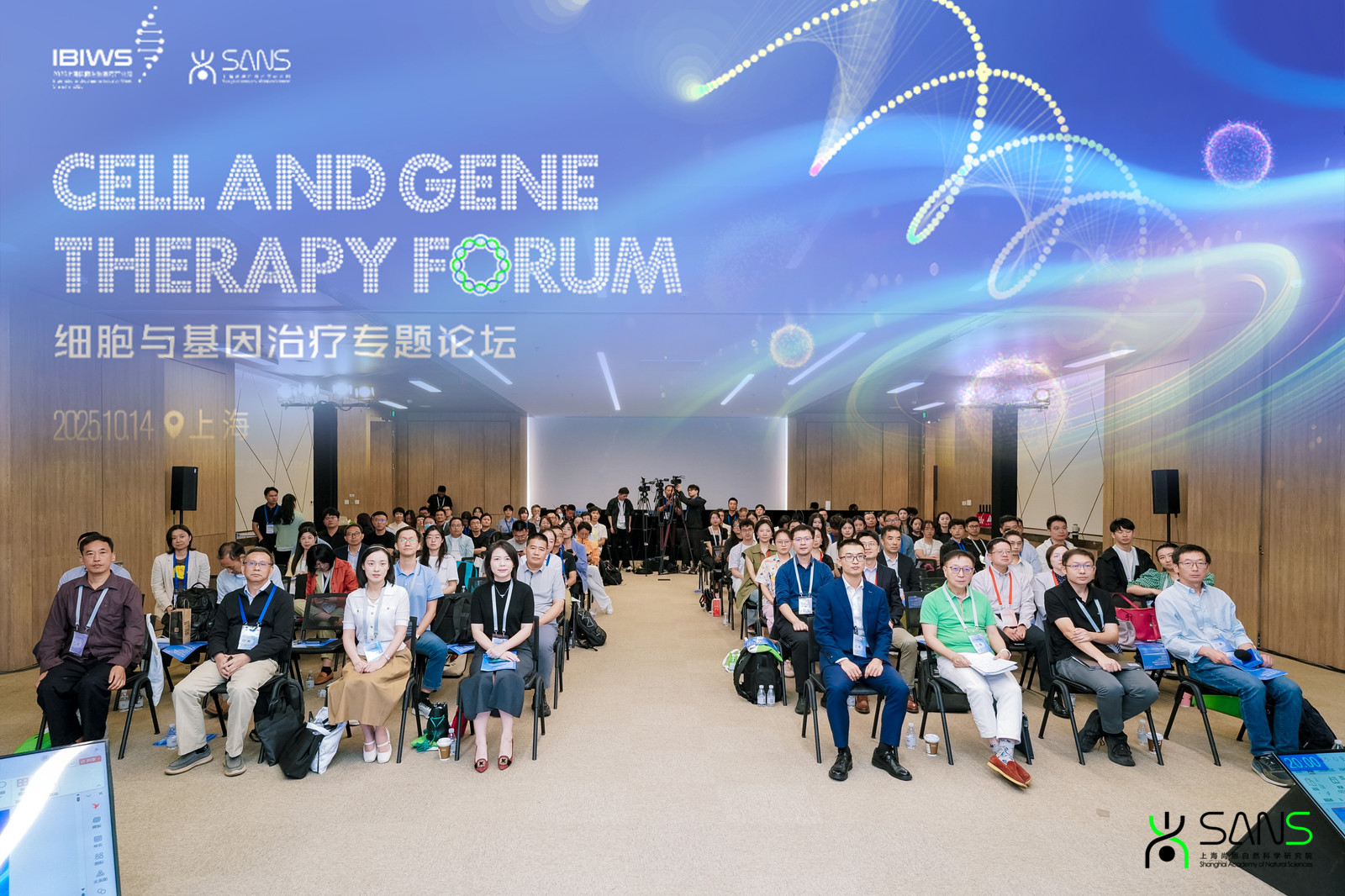
On October 14, the Cell and Gene Therapy Forum, hosted by the Shanghai Academy of Natural Sciences (SANS), convened in Shanghai. Focusing on the key challenges across the CGT pipeline—from frontier exploration to translational application—the forum examined how to break through existing paradigms and achieve substantial progress from scientific discovery to therapeutic solutions, under the dual forces of technological momentum and urgent clinical needs.
The event showcased China’s most cutting-edge CGT innovations: four parallel breakthrough trajectories are emerging—totipotent reprogramming, non-viral genome writing, self-immune reconstitution templates, and digital cell engines. Since the Nobel-winning discovery of iPSCs, somatic reprogramming has continued to surge, yet the ceiling beyond pluripotency—true totipotency—remains: pluripotent cells cannot model extraembryonic tissues nor bypass the germline to create life. AAV-based in vivo gene therapies are limited by short-lived expression and high immunogenicity. Autoimmune diseases remain stuck in “immunosuppression” rather than “immune reconstruction” after a century of therapeutic efforts. AI accelerates drug screening but suffers from insufficient high-quality single-cell data and limited interpretability, leaving a clear gap between preclinical prediction and clinical success. The latest research presented by speakers pointed to promising solutions to these longstanding bottlenecks.
Professor Sheng Ding of Tsinghua University introduced a newly discovered chemical method capable of inducing and maintaining mouse somatic cells in a totipotent state, enabling further embryonic development. This system provides a new model for studying early embryogenesis and pushes therapeutic reprogramming beyond conventional cell or tissue regeneration toward the possibility of life creation without germline involvement. His team is also developing a non-destructive, real-time imaging and multi-omics integration platform to record the full life cycle of cells in vitro—providing precise coordinates for intervention. As he noted: “If we can film a movie of a cell instead of taking a single picture, we can truly understand life.” Traditional single-cell sequencing offers only static snapshots, but a cell’s fate lies in its continuous frames.
Researcher Wei Li from the Institute of Zoology, Chinese Academy of Sciences, emphasized that the modular and programmable nature of life makes “genome rewriting” feasible. His team, using a synthetic biology-driven strategy, engineered mammalian genomes via an unpublished R2 retrotransposon-based system, enabling accurate insertion of full gene cassettes into the human genome without viral vectors, achieving over 15% editing efficiency in primary T cells. Their gene-therapy research for crystalline retinitis pigmentosa achieved an average improvement of 20 ETDRS letters in a phase 1/2 clinical study. These breakthroughs present a programmable, non-viral, large-fragment insertion approach for one-time, long-lasting in vivo gene therapy—as Li put it: “If we can write genes, we can rewrite life.”
Professor Xiaobing Wang from Shanghai Changzheng Hospital shared extensive clinical evidence from his team:
- STAR-T (YTS109)achieved deeper and more durable B-cell depletion in refractory SLE and lupus nephritis, improving multiple indicators such as SLEDAI scores and proteinuria.
- iPSC-CAR-NKshowed multidimensional benefits in systemic sclerosis, improving skin and pulmonary function.
- UCAR-T (TyU19)demonstrated robust in vivo expansion and sustained two-month B-cell clearance in immune-mediated necrotizing myopathy and diffuse systemic sclerosis.
The team is simultaneously building a multi-center clinical network with unified SOP/CRF systems, predictive models, and individualized dosing algorithms. This work is driving cell therapy toward standardization, scalability, and reproducibility. Universal CAR products are not merely engineered alternatives to autologous approaches—they represent a new paradigm for autoimmune disease interventions that are one-time or low-frequency, accessible, and consistent. The value of these therapies is transitioning from proof-of-concept to systematic evidence and scalable clinical application.
Dr. Yi Zhao of CRE Life Institute presented progress on “base models for biological perturbation prediction,” emphasizing that perturbation response is essential for both basic research and drug discovery but remains costly to measure experimentally. Deep learning models can simulate experimental outcomes and predict cellular states after perturbation, improving hit rates while reducing cost and time. His team developed CREformer, which enhances prediction accuracy using gene-expression ordering and multi-task training. Zhao also introduced the concept of virtual cells, digital entities that simulate cellular behavior and may eventually form a closed loop with laboratory experimentation—effectively constructing a “digital organism.”
Scholars
Industry panelists provided systematic analyses of how CGT innovations can achieve high-quality industrial translation. Despite explosive growth in recent years, regulatory pathways and payment mechanisms remain key bottlenecks. Companies face challenges across the value chain:
- Upstream:High autologous manufacturing costs; target saturation in hematologic malignancies.
- Midstream:Fragmented manufacturing, unclear real-world evidence rules, and gaps in quality and data compliance.
- Downstream:Undefined reimbursement standards and uncertain paths for capital returns.
Navigating the cooling period and securing early-stage valuation certainty have become central industry concerns.
Zhaohui Wu, Vice President of the China Medicinal Biotech Association, discussed China’s evolving regulatory landscape for cell therapy. He noted that China is moving toward a drug-based regulatory framework. The newly released Regulations on Clinical Research and Translational Application of New Biomedical Technologies define a management structure for new technologies including CGT, though specific translational pathways require further clarification in implementation. While exploratory pilot use has benefits, it also presents risks and ethical issues; careful consideration is needed regarding what to test and how to test. In the long run, alignment with international norms and drug-level translation will remain the mainstream pathway.
China is emerging as the world’s most efficient CGT translational environment, enabled by a clear regulatory window and a large IIT (investigator-initiated trial) population. It is currently the only major market where IIT data can be directly used for registration review, potentially shortening the preclinical-to-approval cycle by 12–18 months.
Carroll Zhang, Managing Director of Cenova Capital, observed that CGT is extending from rare diseases and oncology into common diseases, underpinned by durable and well-defined therapeutic effects. With an expected 23% annual growth rate, the global CGT market is projected to exceed USD 100 billion by 2033. However, its diversity and novelty create a lack of established pathways, making translational failure a core risk. Holistic evaluation across non-clinical, clinical, CMC, regulatory, and commercialization dimensions is essential. Leveraging China’s IIT resources can optimize allocation and accelerate translation. Zhang predicts that with maturing regulation and capital support, China will shift from a “fast follower” to a frontier innovator over the next decade. “The golden era of China’s CGT is not in the past; it is happening now.”
Ting He, CEO of Imunopharm, highlighted next-generation CAR-T designs for solid tumors and a China-specific translational pathway linking molecular discovery, process development, and patient needs. He shared new results for GCC-targeted CAR-T in advanced colorectal cancer: the mid-to-high dose cohorts achieved a 50% ORR and overall survival exceeding 18 months, compared to roughly 6 months with guideline-based therapies. As he noted: “The countdown to a China solution for solid-tumor CAR-T has begun.”
The forum presented breakthroughs across the CGT spectrum—from genome writing in the laboratory to curative CAR-T therapies in the clinic, and onward to digital cells in computation—and clarified key directions for industry development across policy, capital, and manufacturing. China’s CGT field is transforming “original innovation” from a slogan into verifiable data, scalable processes, and predictable value.
As the host, the Shanghai Academy of Natural Sciences (SANS) is committed to supporting top scientists through new models and mechanisms to pursue frontier-shaping, pioneering, groundbreaking, and disruptive basic research. As SANS President Professor Bai Lu emphasized: “True first-in-class innovation requires new targets, new mechanisms, and new technologies—it is a leap from 0 to 1.”
Shanghai is emerging as a global pioneer of first-in-class breakthroughs—built on a cultural foundation that dares to go from 0 to 1.
Scholars